

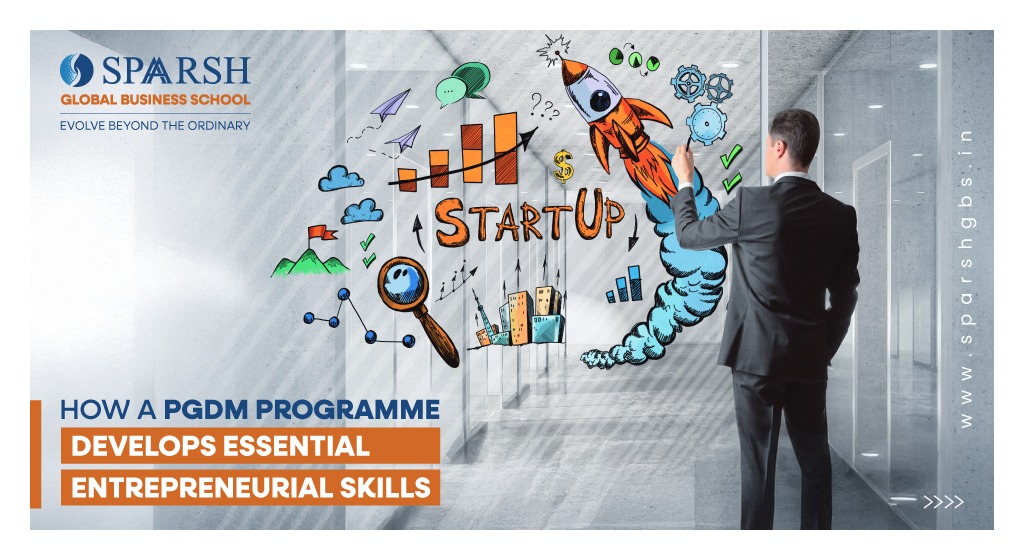
In today's world, entrepreneurship has a bigger meaning and goes beyond just starting one's own businesses. This is now more of a mindset, one which values innovation, problem-solving and leadership. Is it even possible to gain such skills in an academic setting? A Post Graduate Diploma in Management (PGDM) does exactly that. It nurtures the entrepreneurial spirit while preparing students for leadership roles in both corporate and start-up environments.
A PGDM programme goes way beyond just business theories and management practices. It builds confidence, resilience and creativity in students. It helps children spot opportunities, take smart risks and turn those fresh ideas into something real. For parents looking at Sparsh Global Business School for their children, knowing how this programme turns students into entrepreneurs matters a lot. It is a key part of deciding wisely.
1. Encouraging Innovative Thinking
Entrepreneurship begins with an idea — something new, different and meaningful. A PGDM programme encourages students to think beyond traditional approaches. Students get pushed hard through projects and research along with case studies. They have to tackle actual problems, giving them hands-on insights into the practical world.
They pick up skills like analysing gaps in business and spotting opportunities in the market. They figure out fresh ways to handle daily challenges. They bring creative ideas into choices about money, marketing and running operations.
Solving problems on their own builds up their self-assurance. It lets them own their concepts fully, which is a big part of what makes an entrepreneur succeed.
2. Building Leadership and Team Skills
You can't have a business that works without sound leadership. In the PGDM programme, students engage in group work. They do management simulations and leadership drills. All these foster collaboration and team work. It highlights empathy and leadership traits as well.
Leadership has a new meaning in today's era and goes way beyond giving orders to a team. Leadership is more participative now, where one needs to motivate people, lead from the front and roll with whatever changes come up. Through learning from peers, getting mentored and engaging in live projects, students shape their own approach to leading. It is a blend of inculcating self confidence as well as compassion for others. That's exactly what upcoming business start-ups require.
3. Exposure to Real Business Environments
Entrepreneurs must understand how businesses function in the real world. PGDM programmes help close that gap between classroom knowledge and real world exposure. They do this through internships, shadowing industry experts and experience in real-life projects.
Students end up learning about market workings. They see how consumer habits shift and how companies compete against competitors. At Sparsh Global Business School, experts from industry engage with students through workshops, guest lectures and assignments. All these give students a true feel of what starting a business really means on the ground.
4. Learning Financial and Strategic Management
Getting knowledge on finances matters a lot for entrepreneurs. The PGDM setup pushes students to nail down subjects like Accounting, Economics and Financial Management. Students learn to manage budgets, spot risks early and craft business plans that reach far, while being grounded.
Strategic Management covers growth planning and finding market opportunities. This blend of number crunching and big picture thinking empowers students to learn how to steer companies ahead.
5. Building a Network of Mentors and Peers
Entrepreneurship leans hard on teamwork and strong links in the industry. One real win from PGDM is the alliances it builds up. Students build networks with people of varied backgrounds, academically and culturally, which leads to sharing ideas and teaming up. They connect with mentors, teachers and big names in the industry, getting advice that leads to real career openings. Plenty of startups kick off from links formed back in PGDM days. This network ends up being a steady backup for people chasing entrepreneurial paths.
Starting or running a business means facing a lot of uncertainties and failures along the way. Emotional intelligence keeps students steady when things get tough. The PGDM curriculum really pushes for self-awareness and stress management, plus adaptability.
Resilience matters too. Students have ongoing assessments and feedback, not to mention industry projects that stretch their skills. They learn to bounce back from setbacks in a positive way and start seeing challenges as opportunities to grow, instead of viewing them as just roadblocks.
A lot of top business schools have incubation centres. They let students take ideas and turn them into actual startups. They get workspace, mentors to guide and even connections to investors. Students build prototypes, test business models, all in a setup that supports them. This kind of hands-on work gives students real practical experience. It builds confidence, so they can go from just an idea to actually making it happen.
Conclusion
A PGDM programme does more than just imparting classroom knowledge. It shapes entrepreneurial skills that gear students for whatever challenges business throws at them tomorrow. Leadership, innovation, resilience, strategic thinking, all these cover the base for success in a well-rounded way.
Parents looking at options for their children might want to check out Sparsh Global Business School. It strikes that balance between solid academics and real-world exposure. It ensures that students are not only ready for jobs, but also ready to create opportunities, lead teams and make a meaningful impact in the global economy.
FAQs
1. Can a PGDM help students start their own business?
Yes. A PGDM programme equips students with essential entrepreneurial skills such as business planning, leadership, financial management and decision-making. It gives them the foundation to either start their own venture or innovate within existing organisations.
2. How is a PGDM different from an MBA when it comes to entrepreneurship?
While both focus on management education, a PGDM is often more industry-oriented and flexible in its curriculum. It places stronger emphasis on practical learning, innovation and hands-on exposure — key factors for developing entrepreneurial abilities.
