
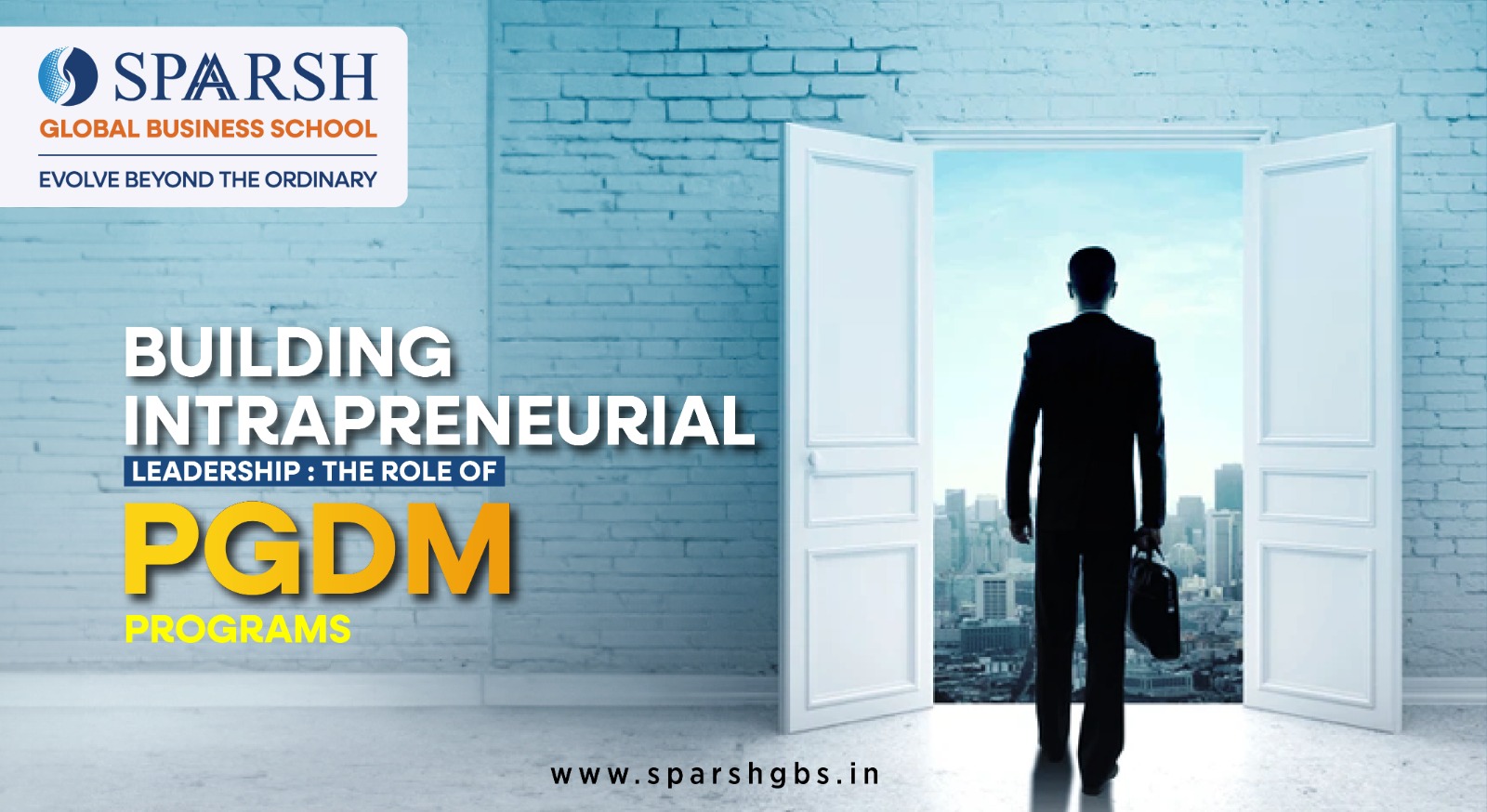
The business world has changed dramatically over the past decade. Companies no longer want managers who simply follow instructions. They need leaders who think like entrepreneurs whilst working within established organisations. This shift has made intrapreneurship one of the most valuable skills in modern business. When your child joins a Post Graduate Diploma in Management programme, they are not just learning theory. They are being trained to become the kind of professional who can drive innovation from within. These programmes have recognised something crucial: the future belongs to those who can create value without waiting for permission. Traditional MBA approaches focused heavily on analytical skills and functional knowledge. In today's landscape, PGDM courses have taken a rather distinct path. They aim to foster what we call an intrapreneurial mindset—essentially training students to be the ones driving change rather than merely trying to keep up with it. It’s a vital shift, really. We see markets completely flip overnight and technology upending entire sectors without much warning. In such a world, simply having "textbook" answers isn't going to be enough for your child to truly thrive.
The Heart of Intrapreneurship
But what do we actually mean by intrapreneurship? Effectively, it is about thinking and behaving like an entrepreneur, but doing so from within the structure of an established company. It’s that rare blend of a startup founder's creative spark mixed with the heavy-duty strategic thinking that corporate life demands.
Our PGDM curriculum is very much built around this. We try to strike a delicate balance between encouraging bold risk-taking and maintaining a sense of professional responsibility. Students are taught to spot those little openings that others might overlook, gaining the sort of confidence needed to pitch a fresh idea—and, more importantly, the practical grit to actually make it work.
The gap between old-school management theory and this modern, intrapreneurial way of working is quite substantial, to say the least. One teaches students to fit into existing systems. The other prepares them to reshape those systems from within.
Practical Learning Beyond Theoretical Frameworks
PGDM courses at institutions like Sparsh Global Business School emphasise on experiential learning. Your child won't just read case studies. It’s one thing to read about a crisis in a book, but quite another to be in the thick of it. That’s why our students get started on live projects, working alongside real firms to tackle the sort of issues they’re facing right now. This practical, "boots on the ground" method builds up a level of problem-solving skills that you just can't replicate in a lecture hall.
To complement this, we use business simulations. These act as a sort of safe harbour—a place where students can test out different, perhaps bolder, strategies without the fear of a real-world collapse. It’s about giving them the freedom to experiment and, occasionally, to get things wrong, because that is often where the most profound learning happens.They learn from failures without real-world consequences. Group projects teach them how to convince skeptical colleagues and navigate organisational politics. These experiences build the resilience that intrapreneurs need.
Industry mentorship programmes connect students with professionals who have successfully driven innovation within established companies. Our mentors bring a wealth of experience to the table, offering the sort of nuggets of wisdom you’ll never find tucked away in a textbook. They sit down with students and pull back the curtain on how things actually work—explaining, for instance, how to get people on board with a radical new idea or how to navigate that inevitable pushback when you're trying to shake things up. It’s that human element of the workplace that’s so often overlooked.
Cultivating the Art of Creative Problem-Solving
One thing we’re very firm on is that genuine innovation isn't just a stroke of luck; it doesn’t happen by accident.
It is a discipline that needs to be nurtured. We teach our cohorts to look at a problem from every conceivable angle, pushing them to find solutions that aren't just 'good enough', but are truly transformative. It's about moving beyond the obvious and having the courage to ask "what if?" when everyone else is following the script. PGDM programmes teach structured approaches to creative thinking. Students learn frameworks like Design Thinking and Lean Startup methodology. Perhaps more crucially, we find our students learn that the fine balance of when to lean on a framework and when to simply trust their gut is a bit of an art, really.
We run regular brainstorming sessions that are designed to stretch them—pushing everyone well past those easy, 'off-the-shelf' answers. Our faculties don't make it easy; they’ll challenge the very assumptions most people just take for granted. That kind of relentless intellectual nudging eventually rewires how a student looks at a hurdle. They start spotting openings where others only see a brick wall.
Then there are the cross-functional projects. You might have a Marketing student paired up with someone from Finance, which is exactly how the real world operates. Intrapreneurs can't live in silos; they’ve got to navigate those departmental boundaries and speak different corporate languages to get anything off the ground.
Leadership Through Taking the Reins
At SGBS, we’re big believers in giving students a proper bit of autonomy. This sense of 'ownership' is the bedrock of the whole intrapreneurial journey. We tend to handle things this way:
- Giving them the steer on their own projects, within reason of course.
- Handing over actual budgets to manage and real calls to make.
- Focussing on the final results rather than hovering over them and micromanaging every tiny step.
- Backing them to take a calculated gamble rather than always choosing the safest, dullest route.
It’s a mirror of what your child will face eventually. They’ll need to win over stakeholders and manage their resources without someone constantly holding their hand.
The Power of the Network
The ties that these students form during their time here often end up being just as vital as the degree itself. Our alumni networks open doors to professionals across every sector imaginable. These are the people they’ll call on years down the line when they’re trying to get a new venture or a fresh internal project off the starting blocks.
Guest lectures from industry leaders expose students to different leadership styles. They see how successful intrapreneurs navigated challenges in various organisational contexts. These real stories provide practical wisdom that supplements academic learning.
Collaborative projects teach students how to leverage diverse skill sets. It is a rare thing to see an intrapreneur working in total isolation. In reality, they have to be the glue that holds a team together, inspiring their peers to buy into a vision that might seem a bit daunting at first. Our PGDM programme are practically designed to force these moments of collaboration, ensuring that students learn how to lead people who might have very different ideas from their own.
Navigating the Digital Shift
We’ve woven the latest tech—things like AI, Blockchain and the ever-present Data Analytics—right into the fabric of the curriculum. However, we should be clear: we aren't trying to turn everyone into a computer scientist. The real goal is 'technological fluency'. We want our students to look at a new piece of tech and immediately spot how it could actually solve a thorny business problem or streamline a cumbersome process.
This dual competence is exactly what’s needed for digital transformation. You need leaders who can sit in a boardroom and talk strategy, then turn around and understand what the development team is actually capable of delivering. At SGBS, we make sure they can walk in both worlds through a mix of theory and very hands-on applications.
Facing the Corporate Music
The best training doesn't shy away from the fact that offices are complicated places. We spend a lot of time on 'change management'—essentially the art of building coalitions and getting people on your side. After all, even the most brilliant idea will fall flat on its face if you haven't got the stakeholders to buy in or a solid plan to execute it.
We look at case studies of both the wins and the spectacular failures. Seeing why a project floundered is often far more instructive than just reading about the success stories. It teaches the students that they’ll need a healthy dose of patience and persistence to go along with all that creativity and boldness.
A Final Thought
When you’re looking at a PGDM for your child, you’re really investing in their ability to keep their head even amidst crisis. It’s about giving them the tools to lead when the path ahead isn't particularly clear. These programmes do not just prepare students for existing roles. They train them to create the roles that organisations will need tomorrow. Sparsh Global Business School and similar institutions understand that leadership excellence now requires an intrapreneurial mindset. Your child will graduate with the confidence to propose bold ideas and the competence to make those ideas a reality. That combination matters more than ever in today's business environment.
Frequently Asked Questions
Q1. How does intrapreneurship differ from entrepreneurship in the context of PGDM education?
Intrapreneurship focuses on driving innovation within existing organisations rather than starting independent ventures. PGDM programmes teach students how to navigate corporate structures whilst maintaining an entrepreneurial spirit. They learn to secure resources, build internal support and implement changes without the autonomy that entrepreneurs enjoy. This requires different skills including stakeholder management and organisational politics alongside creative problem-solving.
Q2. Will an intrapreneurial focus limit my child's career options to large corporations?
Not at all. The skills developed through intrapreneurial training prove valuable across all organisation types and sizes. Whether your child joins a multinational company, a growing startup or eventually launches their own venture, the ability to identify opportunities and drive change remains crucial. Many successful entrepreneurs actually began as intrapreneurs, using their corporate experience to understand market gaps before venturing independently.
