
Artificial Intelligence has changed how businesses communicate. That's not speculation anymore. It's happening now. Parents ask us whether their children should learn these technologies. Will AI replace human communication skills? Should students focus on traditional writing or embrace these new tools? These aren't simple questions. At Sparsh Global Business School, we watch this transformation closely. Our students will enter workplaces where AI handles routine correspondence. But here's what many people miss. Technology creates as many opportunities as challenges. Your child needs to understand both sides.
While AI can draft emails in seconds and translate languages instantly, it cannot determine what message truly matters or grasp cultural nuance. The future belongs to professionals who use AI intelligently while prioritising genuine communication and human judgment. Let's walk you through what this shift means for your daughter or son.
How AI is Reshaping Business Communication
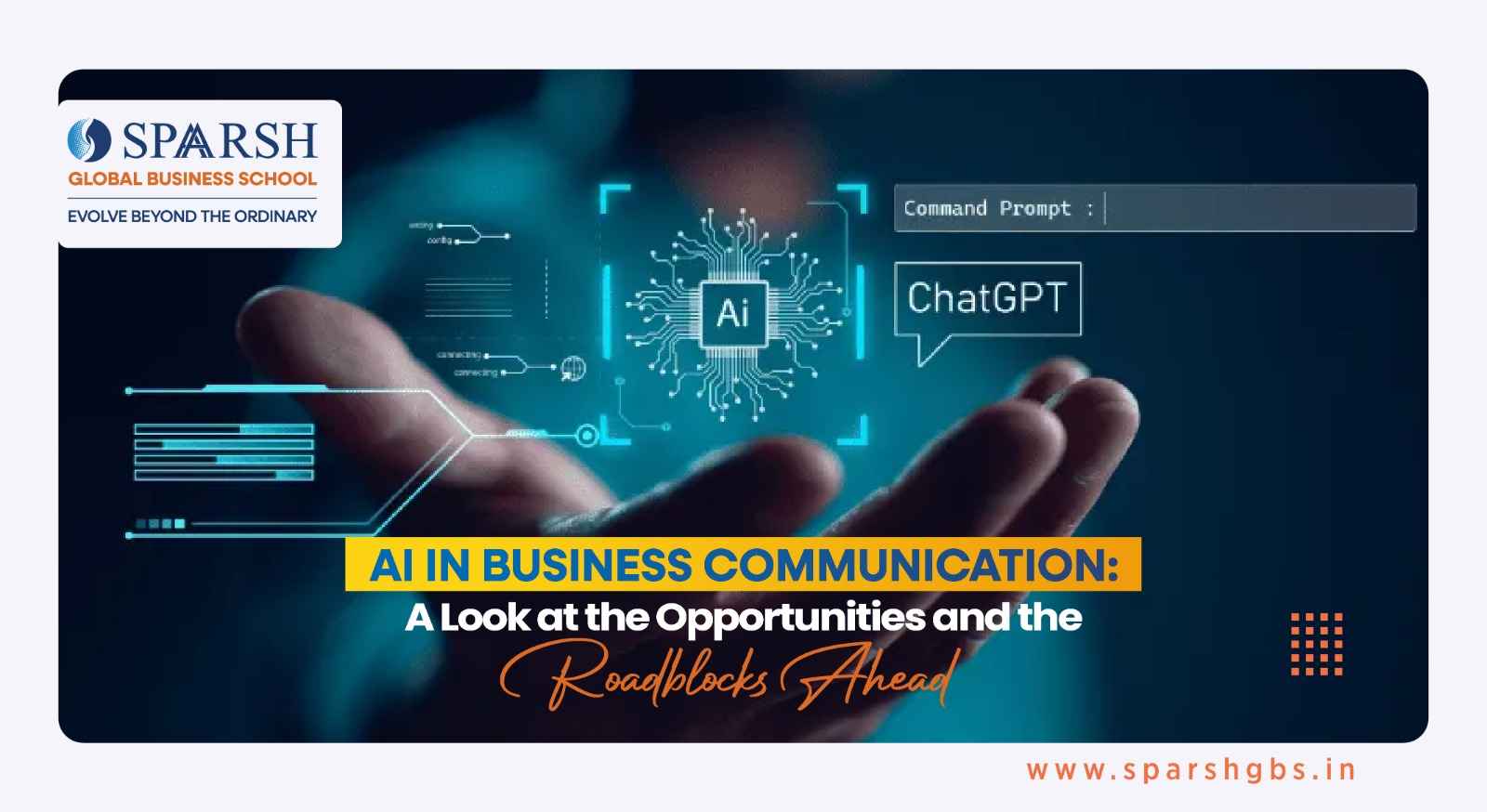
Email drafting takes minutes now instead of hours. Tools like ChatGPT compose professional messages quickly. Meeting summaries generate automatically from recorded conversations. Translation happens in real time across dozens of languages. These aren't experimental features anymore. Companies use them daily. At SGBS we've integrated these technologies into our curriculum because students must understand them. But understanding means more than just using them. It means knowing when they help and when they hinder.
Customer service has transformed dramatically. Chatbots handle initial enquiries. They route complex issues to humans. Response times have dropped from hours to seconds. Companies save considerable money whilst improving service speed. Does this mean fewer jobs? Not exactly. The jobs have shifted. Someone must train these AI systems. Someone must handle what machines can't resolve. Your child's role might involve overseeing AI communications rather than writing every message manually.
Real Opportunities for the Next Generation
Productivity gains are substantial. AI assistance dramatically reduces the hours junior employees spend on routine correspondence, allowing them to shift their focus toward strategic tasks. This transition prioritises and rewards individuals whose strengths lie in understanding business contexts deeply. Your daughter won't succeed by just typing well. She'll thrive by knowing which messages matter and how they should land. AI handles the mechanics. Humans provide the judgement.
Global collaboration has become remarkably easier. Language barriers shrink when instant translation exists. Teams spread across continents communicate smoothly. Cultural differences still matter enormously, but technical communication barriers have reduced. Students from SGBS will work in international environments. They'll collaborate with colleagues from Tokyo to Toronto. AI makes this practical in ways impossible a decade ago.
Data analysis from communication patterns reveals valuable insights. Companies now understand customer sentiment through automated analysis. They spot trends in feedback immediately. This creates roles for people who can interpret these patterns. Your son who studies Business Communication at SGBS won't just write well. He'll analyse what thousands of customer messages reveal about market preferences. That's a different skill entirely.
The Roadblocks Nobody Talks About Enough
AI generates bland, generic content easily. It struggles with personality and genuine warmth. When every company uses the same tools, messages start sounding identical. Differentiation becomes harder. We've noticed something at SGBS. Students who rely too heavily on AI lose their distinctive voice. Their writing becomes competent but forgettable. That's a real problem in business where standing out matters.
Trust issues emerge constantly. Customers increasingly realise they're talking to machines. Some appreciate the efficiency. Others feel frustrated by impersonal interactions. Businesses must balance automation with human touch. Getting this balance wrong damages relationships. Your child needs to judge when personal communication outweighs efficiency gains. No algorithm can make that decision properly.
Cultural misunderstandings multiply when AI translates without context. A phrase acceptable in British English might offend in American contexts. Humour rarely translates well automatically. Business customs vary enormously across regions. AI misses these subtleties regularly. We teach students at SGBS to review AI-generated translations carefully. The technology assists, but doesn't replace cultural knowledge.
What Students Must Learn Now
Critical evaluation skills matter more than ever. Students can't just accept what AI produces. They must assess whether the output serves their purpose. Does this email strike the right tone? Will this message resonate with this particular audience? These questions require human judgement. At Sparsh Global Business School, we train students to use AI as a starting point, not the final answer. They learn to edit, refine and personalise what technology generates.
Emotional intelligence remains irreplaceable. Understanding how people feel matters enormously in business. AI can't read between the lines during negotiations. It doesn't sense when a client feels uncertain. Your daughter's ability to perceive unspoken concerns will distinguish her career. We focus heavily on developing these human capabilities because they can't be automated.
Ethical considerations grow more complex daily. Who's responsible when AI generates inappropriate content? How transparent should companies be about automated communication? Students must grapple with these questions before entering professional environments. Business Communication courses at SGBS include substantial ethics components. Your child will face these dilemmas constantly in their career.
Preparing for Tomorrow's Workplace
The best approach combines human and machine strengths. Efficiency from AI plus judgement from humans creates powerful results — a philosophy embedded in a modern PGDM Program in Greater Noida. Students who master both sides gain significant advantages. They won't fear automation because they understand how to direct it. At Sparsh Global Business School, practical training emphasises this hybrid approach. Students write with AI assistance whilst developing their own authentic voice. They use translation tools whilst learning cultural awareness. They employ automation whilst maintaining genuine relationships.
Your child's education must reflect these realities. Learning just traditional communication skills isn't sufficient anymore. Ignoring AI completely would be equally foolish. The path forward integrates both dimensions. That's what professional success will require. At SGBS, we’re preparing students for this integrated reality through our industry-aligned PGDM Program in Greater Noida. They'll graduate comfortable with technology, but grounded in human communication fundamentals.
Frequently Asked Questions
Q1. Will AI make traditional writing and communication skills obsolete for business graduates?
Not remotely. AI amplifies good communication, but can't replace it. Students still need strong foundational skills. They must understand what makes communication effective before they can judge AI output properly. Think of it like calculators in Mathematics. Calculators handle computations quickly, but users must understand which calculations to perform. Similarly, AI drafts messages quickly, but your child must know what those messages should accomplish. We're seeing that employers value graduates who combine strong traditional communication skills with AI proficiency. That combination is what SGBS develops.
Q2. Should my daughter specialise in AI-related communication or focus on traditional Business Communication?
Modern Business Communication inherently includes AI tools. Your daughter can't truly specialise in one without understanding the other. At SGBS, the curriculum integrates both naturally. Students learn communication principles whilst using contemporary tools. They study persuasion techniques and practise them through multiple channels including AI-assisted platforms. The distinction between traditional and AI-enhanced communication is blurring rapidly. Your daughter should develop comprehensive communication abilities that span both domains.
